Some Thoughts on Advance Reading (Part 2)


Reading

Some Thoughts on Advance Reading (Part 2)


In a previous post I talked a little about the process of being an Advance Reader for an author.  So this time around I thought I might talk a bit about what that actually means for me as a reader of fantasy, science fiction and genre literature.  The pros and cons of the job, if you will.


From a fan perspective this sounds like the world’s greatest job… you get to talk to/meet/e-mail/have dinner with authors whose work you love, you get to read the books well in advance of publication, and… very occasionally… they may make some changes to the book based on your opinion.  What’s not to love?  It is a fan’s dream.


However, as with any job there are a couple of downsides.

Continue reading

Review: Dancer’s Lament (Path to Ascendancy Book 1) by Ian C. Esslemont


Dancer's_Lament_cover

Review: Dancer’s Lament (Path to Ascendancy Book 1) by Ian C. Esslemont

Shorter Review:

A great fantasy novel that is quintessentially ‘Malazan’ but in a streamlined, more story-centred form.  The three main POVs give a tight focus to the first step of Shadowthrone and Cotillion’s legendary journey.  A brilliant entry point to the Malazan universe for new readers as well as established Malazan fans.


Longer Review:

When Ian C. Esslemont and Steven Erikson whiled away the hours on archaeological digs by creating the intricate fantasy world of the Malazan Empire and gaming adventures in it with the GURPS system, they also created the bedrock for one of the most engaging secondary world Epic fantasies in the genre.  It is rare that two authors share ownership of a world and continue to produce well-crafted stories that intertwine and overlap, but never repeat.  While co-creators they each possess their own writing style, and with Dancer’s Lament Esslemont demonstrates his command of both the fictive reality and a tightly focused, story-centric narrative.

Continue reading

Review: The Skull Throne (Demon Cycle Book 4) by Peter V. Brett

The Skull Throne


Short Review:

An epic fantasy that is showing signs of runaway plot-threads.  Secondary characters are given full rein while the central characters and story of Arlen and Jardir are side-lined once again.  Also hints of unnecessary complexity added to an already full story at the expense of the core, magical story.  Despite this, it is an interesting and enjoyable fantasy that further expands the world and the broader narrative canvas.


Longer Review:

If you are reading this I am assuming that you have already read the first three books in the series (The Warded Man/The Painted Man, The Desert Spear, and The Daylight War).  If you haven’t, this book won’t make much sense to you at all.  As it is, even after having read the first three, there isn’t much of a continuation of the main story and this reads as overly complicated, needless filler or as a side narrative that sits as a companion to the main story.  Don’t get me wrong, it was entertaining and I enjoyed reading it, but I just didn’t care about a lot of the secondary characters who had suddenly leapt into prominence.  And I was one of those people that really liked The Daylight War.  But, before I go on about the aspects of the novel that I didn’t like, let me first say that it was a good book. It was readable.  There were some genuinely engaging aspects and more than one event that I didn’t see coming.  It was good enough that I will be buying the next one.

Continue reading

Review: Deadpool (dir. Tim Miller, 2016)

Deadpool Poster


Review: Deadpool (dir. Tim Miller, 2016)


Short Review:

Violent, quip-laden superhero film that indulges in self-referential meta-humour as much as it does crude, sexual humour.  Highly entertaining sophomoric juvenilia that revels in its nerd-dom and pokes fun at the very comics-based industry it celebrates and is part of.  Brutal, silly and joyful celebration of superhero geekiness.


Longer Review:

Adapting a character like Deadpool to the big screen didn’t go well the first time around in X-Men Origins: Wolverine (dir. Gavin Hood, 2006), but this time Ryan Reynolds got to indulge in a fairly accurate portrayal of the infamous ‘Merc with a Mouth’.  Rated 15 in the UK. Deadpool is a gratuitously violent superhero film with a penchant for off-colour sexual humour.   Ryan Reynolds plays Wade Wilson, a smart-mouthed former Special Forces soldier turned mercenary.  Wilson is diagnosed with terminal cancer, volunteers for an experimental treatment that gives him superpowers, and ends up going on a violent revenge rampage.

Continue reading

My 2015 in Film (part 1)

Cinema Screen


My 2015 in Film (Part 1)


This is a brief rundown of some of the films I watched that were released in 2015 and what I thought of them… and when I say brief, I mean as brief as I can get.


Ex Machina (2015, dir. Alex Garland)

I really liked Ex Machina.  It was a great SF film that posed the question ‘If I were a genius multi-billionaire what sort of sex robots would I build?’  But more importantly it was a film that:
a) Proved the necessity of Asimov’s 3 Laws of Robotics.[1]
b) Neatly illustrated the creepiness of the ‘male gaze’.
c) Was a fascinating look at what AIs mean for concepts of humanity and life.
d) Never enact a plan without thinking through what could possibly go wrong.
e) Engineers and Scientists might be able to make anything, but a Humanities specialist might be able to tell you whether or not it is a good idea.

With such a small cast it was really well done and was both entertaining and thought provoking.  The SFX weren’t flashy but integrated neatly into the frame and thereby added to the story rather than distract from it.


Jupiter Ascending (2015, dir. The Wachowskis)

This one got hammered by the critics and general audiences alike.  Personally, I thought it was a great SF version of Cinderella.  OK, so it wasn’t an SF blockbuster action movie as the trailer may have led us to believe, but it was a pretty good adaptation of the fairytale and had Jupiter not needed rescuing quite so much, would have been a strong contender for a decent feminist SF film with mass appeal.  It just felt a little disjointed and pitched awkwardly to different audiences.  Visually, as we have come to expect from the Wachowskis, it was stunning and the alien technology, the ships and all the SFX were first rate.  But I think that in a few years people might re-evaluate it as a fairytale and it will get a lot better traction.


Chappie (2015, dir. Neill Blomkamp)

This was a film I was really disappointed in.  I loved District 9, but this one (like Elysium) left me cold.  It felt like a slightly tedious and overly serious remake of Short Circuit (1986, dir. John Badham) without Steve Gutenberg.  The story made almost no sense, the themes were disjointed rather than marrying up into a cohesive whole, and the comic beats fell in all the wrong places for me.  It also seemed to be unable to settle on whether it was a social commentary, an action movie, or a film about AIs.  Even the impressive cast couldn’t save this one for me.


Furious 7 (2015, dir. James Wan)

What can I say?  This was just like all the others.  It was a slow Sunday.  There was nothing else on.  If you enjoyed the first raft of these films then you will enjoy this one.  Fast cars, over the top action, scenery chewing acting, and cornball dialogue.  And it has Vin Diesel.  That is the major reason to see it.


Avengers: Age of Ultron (2015, dir. Joss Whedon)

I might actually do a full review of this sometime, but in short form… it was a superhero blockbuster that almost equally divided its time between three things:
1) promoting the next instalments in the franchise;
2) Pure action scenes depicting orgies of narratively irrelevant wanton destruction;
3) Actual story.
It looked pretty though, and I am sucker for Superhero stories.


Mad Max: Fury Road (2015, dir. George Miller)

This was one of the highlights of the cinematic year for me.  I am not really a gear head in anyway, and didn’t grow up on the Mad Max films so I was a bit wary going into this one, but I loved it.  Tom Hardy did an amazing job channelling a young Mel Gibson.  Charlize Theron was unsurprisingly brilliant in this.  The story was action packed and had a deep thematic resonance.  The visuals were amazing. Even though it is essentially one long chase, Miller did a fantastic job carving up the scenes to alter the pace and mood along the way.  I just loved this film.  An action movie is fun, interesting, thought provoking, has great acting and characters, stunning visuals and that challenges concepts of patriarchy without being preachy… who’da thunk it.  A really excellent film.


Tomorrowland (2015, dir. Brad Bird)

This was another Sunday afternoon that I had little better to do.  It was surprisingly alright.   OK so the villainous Hugh Laurie was ridiculous and nonsensical, but there was some interesting stuff in there about predestination and self-fulfilling prophecies, the misuse of technology versus its potential to save us… and there were some cool visuals and some slapstick comedy.  And its central message of optimism was actually rather endearing and refreshing given the cynicism and world-weariness that seems the prevalent mode at present.  I won’t be rushing out to buy the DVD and re-watching it any-time soon.  But there were worse ways that I could have spent that afternoon.


Inside Out (2015, dir. Pete Docter)

It might not have done as well as Finding Nemo (2003, dir. Andrew Stanton, Lee Unkrich) but this was a fun family animated film that had some great voice acting and some heart wrenching scenes about growing up.  I may have teared up a little at the fate of the imaginary friend, Bing Bong, and, barbarian that I am, I actually preferred it to Nemo.


San Andreas (2015, dir. Brad Peyton)

This has to have been one of the most unintentionally hilarious films I have ever seen.  I spent most of the time watching it struggling not to laugh uproariously at the ridiculous dialogue, the massive plot holes, the complete lack of intelligence and the wonderfully unsubtle characterisations.  This is a great film to watch if you need cheering up.  I really, really enjoyed it… just not in the way I think the director intended.


Jurassic World (2015, dir. Colin Trevorrow)

So apparently 2015 was the year of the re-quel.  Part re-make and part sequel, this was pretty much a more sparkly and visually up-to-date re-make of the 1993 original.  So if you liked it, you will probably like this.  The dinosaurs looked cool though.  Yeah.  Not much to say on this apart from it was an updated version of the original.  Huh.


Terminator Genisys (2015, dir. Alan Taylor)

Re-quel number 2 of the year for me.  I might be in a minority, but I honestly think that Arnold Schwarzenegger should never be in another Terminator film ever again.  Hey, if we can re-cast Spiderman, Batman, and Superman every couple of years, why the hell can’t we re-cast the Terminator?  It was a fun blockbuster explodey-fest that made little sense and had gaping plot holes that are undoubtedly going to be either poorly explained or made worse by subsequent films in this franchise.   Did anyone else think that both Jai Courtney and Jason Clarke were remarkably well fed looking for people meant to be living in a post-apocalyptic wasteland full of evil killer robots?  It lacked the grim punch of the original, but that was probably because it seemed aimed at a much younger audience.  Well, we shall have to see what the sequels will be like.


Ted 2 (2015, dir. Seth MacFarlane)

I need to find better things to do on my Sunday afternoons.  I thought this was terrible.  The crude humour of the first one was occasionally funny, but this time around it just felt stale, flat, fetid, tired, obnoxious and boring.  Ah well.


Ant-Man (2015, dir. Peyton Reed)

I love superhero films, and this one could have been great, especially if it had fully embraced its ridiculous premise.  As it is, it has the feeling of a director wanting to do the fun, silly thing and fully commit to the absurdity, and a studio intent on making it a serious action blockbuster.  So, it ended up feeling like an uneven, fairly unoriginal, origin story film.  Plus, it suffered from that same problem of working hard to advertise and set up future films in the franchise instead of focusing on the story it was meant to be telling.  But it had a fight between tiny people on a toy train.  So I don’t regret seeing it.


[1] A robot may not injure a human being or, through inaction, allow a human being to come to harm.
A robot must obey the orders given it by human beings except where such orders would conflict with the First Law.
A robot must protect its own existence as long as such protection does not conflict with the First or Second Laws.

David Geddes Hartwell (10th July 1941 – 20th January 2016)

Joseph Prinz, AP Canavan & David G Hartwell ICFA 2013

(Photo by Ellen Datlow at ICFA 2013.  Joseph Printz, AP Canavan and David G Hartwell)

David Geddes Hartwell  (10th July 1941 – 20th January 2016)


I can’t quite wrap my head around the idea that David is gone.  Part of the reason is I was secretly convinced he would go on forever.  He seemed invincible, indefatigable, and impervious to the passage of time.  When I think of the genre, David is just part of that concept.  He is just there.  The genre is the wrong shape now because there is a hole where he stood.  The landscape has shifted and I can’t seem to reorient myself at the moment to comprehend the genre without him in it.

I first met David nearly 10 years ago at the International Conference on the Fantastic in the Arts (ICFA).  At the time I had just started my Ph.D. in Fantasy literature and had no idea just how important and influential David was.  Even now I find it hard to grasp David’s impact on the field and the legacy he created.  To me, then and there, he was the man that ran the conference book room, bummed cigarettes from me, and managed to make what he wore into a martial art.  Over the course of the next few years he became a friend, although I don’t think he ever forgave me for starting to alphabetise (but never quite finishing) the books in the book room.  We talked about, discussed, and heatedly debated fantasy and science fiction.  He good-naturedly bemoaned my lack of knowledge about the history of the field, always encouraged me to read more, and was never short of a recommendation, or fifteen, of books I HAD to read.

David was an editor at Tor in New York.  He was, along with Kevin Maroney, the New York Review of Science Fiction.  He was a critic, a reviewer, an editor, a collector, and a passionate consumer of great stories.  His knowledge and understanding of SF fandom, literature and history was unparalleled in my experience.  He also had a doctorate in Medieval Literature, even if he was sometimes shy about admitting to it.  He was passionate about poetry.  He used to sing ‘Teen Angel’ late at night after a few drinks.

A few years ago I spent the summer at his house in Pleasantville, NY.  For nearly three months I lived in Hartwell’s basement.  The whole house was crammed to the rafters with boxes of books, manuscripts, and correspondence with authors like Philip K. Dick, James Tiptree Jr. and Joanna Russ.  He had boxes of fanzines and newsletters stretching back to the 1950s.  There were boxes of classic SF magazines and pulps like Galaxy and Astounding. He even had a letter from Kurt Vonnegut thanking him for a review he had written of Slaughter House Five for Crawdaddy fanzine.  None of it was in any order whatsoever.

I was there that summer to help him sift through and sort those mountains of boxes and endless reams of paper into something slightly more manageable and organised.  It was like an Aladdin’s cave of treasures for someone like me.  I discovered first editions of books that he had forgotten that he had.  Letters that he thought he had lost.  Hand-annotated, typewritten manuscripts from famous and influential authors.  Pictures, notes, and memories.  All of them randomly stuffed into the hundreds of boxes that were stacked up in every room of the house.  It was the history of the genre in a tangible form.

In the evenings, he would come in from work, grab a beer, steal a cigarette from me, and then sit out on the back deck and tell me about his day at Tor.  Or he would talk to me about some aspect of fantasy writing or SF.  Or he would tell me a story about Philip K. Dick.  Or George R.R. Martin.  Or Ursula K. LeGuin.  Or Frederick Pohl.  Or any one of the great SF and Fantasy writers he had worked with, or knew, or had been to conventions with.  And he seemed to know them all.

He took me to Readercon that year and I worked his table in the book room there.  We sold books, and back issues of magazines and fanzines.  He wheeled and dealed and then headed off to sit on a panel, lead a discussion, or schmooze across the foyer.  He introduced me to the other booksellers, and introduced me to ‘Chip’ or as I had previously been aware of him, Samuel R. Delaney.  Everyone knew David, and he knew everyone.

That summer wasn’t all roses though.  David didn’t believe in air-conditioning and I ended up with heat-stroke and recurring heat-exhaustion.  We were also dependent on my cooking skills for most of the summer.  And, at times, he wasn’t always the easiest person to get along with.  But now, in light of what has happened, I am glad I was there.  I am glad I got to spend that time with him.  To listen to him.  To have him as a friend.

I can’t imagine going to ICFA and not seeing him there.  Not seeing him in the book room.  Not seeing him sauntering down the hall with his camera around his neck.  Not seeing him outside the banquet taking photos of everyone so that he could help us capture those memories.  Not having those quiet moments out by the pool when we would talk about our troubles, our worries, and happier things.

The loss of David G. Hartwell to the fields of Science Fiction, Fantasy, and Horror, is staggering.  The loss of David G. Hartwell to fandom is overwhelming.  But it is the loss of David as a friend that I feel most keenly.

David, I will miss our talks.  I will miss you stealing smokes.  I will miss your jokes and stories.  I will miss your truly terrible outfits that came close to physically making my eyes bleed.  I will miss you my friend.

I am so sorry for his family who are grieving him.  My thoughts and best wishes go out to them.

Rest in Peace David.

Review: The Unremembered (Author’s Definitive Edition) by Peter Orullian


The Unremembered


Review: The Unremembered (Author’s Definitive Edition) by Peter Orullian
Book One of The Vault of Heaven Trilogy


[Edit Note: Having just read the second book I am really glad I stuck with this series.  So while the review below is fairly negative, Book 2 Trial of Intentions is by far the better book, and the promise in this series finds fruit in the second volume.]


Short Version:  A solid epic fantasy that hits all the right notes, but perhaps in a slightly too familiar tune.  It might not blow you away, but it does promise a much deeper and rewarding story in subsequent volumes now that the foundations have been laid and the author feels freer to explore the world he has built.


Longer Review:  The publishing history of Peter Orullian’s first volume of the Vault of Heaven trilogy is a fascinating story in and of itself, one that resulted in a new version of the first book being released that is significantly shorter and quite different from the original release.  As this is the author’s preferred edition, the latest edition, and the one that now serves as the first book of a trilogy, the review below is of it and not the original publication.


Fans and authors walk a tightrope when it comes to epic fantasy.  As fans we want more of the same, only different.  Like the Lord of the Rings, only different.  Like The Shannara Chronicles, only altered.  Like the Wheel of Time, but new.  Familiar enough that they feed the same appetite, but different enough that they don’t feel like carbon copies.  But we also complain loudly when authors aren’t original enough, aren’t innovative enough, and conversely, when they are too innovative, too original.  Authors want to produce recognisable fantasy epics but ones that are unique.  They want their stories to cater to the tastes of the fans, but serve them something they haven’t had before.  There are formulas, tropes, conventions (not the comic-con kind), and stereotypes, and an uneasy, tacit agreement that some should be used, others subverted, and that, in the end, the whole should be a new dish made out of familiar ingredients.  I say all this, because in almost every fantasy epic there are recognisable and familiar aspects.  Those that deviate too far from the beaten path often lose the reader.  Those that stay beholden to established patterns become predictable and not particularly entertaining.  What complicates this further is when the story being told in a volume is a book one, a first step into a new world, the opening of a narrative that is to be at least three volumes long.  Judging a play by its opening act can be a mistake.  Judging a mystery novel by its opening chapters robs the reader of the conclusion.  But in those instances, the whole is present there in one sitting.  For fantasy trilogies, the whole story, spanning three volumes might be thousands of pages long.


So what has this to do with Orullian’s The Unremembered?  Quite a lot it turns out.


I don’t set a lot of stock in plot summaries because, by their very nature, they distil the story down into a few lines bereft of context, flavour or character, and are bland generalisations of what you find in a book.  But they do give you an idea, however vague, of what you are about to read.  So, with my provisos in place that this is not truly representative of what is actually delivered in the book…


A brief summary of the plot will have fantasy fans groaning as it appears as stereotypical and unoriginal as you can get.  A young boy with a special magical gift (in this case with a bow), on a journey with a magical and wise man, accompanied by a close friend to provide occasional comic relief, a warrior woman, a sister with a magical ability with song, and an apprentice warrior scholar.  Ok so the last one might look a little out of place.  They are on a quest to journey to a mystical place in an effort to save the world from a mystical evil.  A dread magical evil that had previously been banished from the land, but the barrier holding the evil back is failing.


So on the face of it there is little here to suggest that Orullian’s book is anything but ‘unremembered’, as off-hand I can think of several series that have very similar plots and remember them quite well.  The over-arching story of The Unremembered is very familiar and well-trodden.  Although it should be pointed out that it is well rendered, well told and interesting, but the story itself seems like the foundation work for a bigger story, a larger story, and, at the end of the day, a much more interesting story.  As I read I kept waiting for the world to drop away as some amazing plot development sprang into the fore, but that never materialised.  There are hints of this grander narrative, the tantalising glimpses of a rich history that will be developed in the future, flashes of plot points that look dead set to blossom into a rich, deeper and more original tale in future instalments, but as it stands, The Unremembered is a solid foundational epic fantasy that does all the plodding groundwork of laying out the bones with none of the real pizazz as it relentlessly pushes the characters through the plot.


But well drawn characters can make even the most well established stories come to life.  Yet, unfortunately, once again, while the groundwork appears to have been laid for all the characters to become much more interesting in the next book, this volume fails to give them the necessary moments to shine and stand out.


Tahn (a name that autocorrect loves to change to Than) is the typical, slightly naïve youth with a mysterious past, mysterious power, and mysterious destiny.  All very mysterious.  As the central protagonist there are strong shades of every other young, slightly callow, boy-destined-to-be-great character from fantasy.  But the story ends just as he experiences something that might actually change him into someone much more engaging and unique.  This is not entirely unforeseeable as the story focuses on Tahn’s journey toward the rite of passage that will make him a man.  He is not badly written, he is not overly annoying, he is just not fully developed here.  He is the bare bones of the character he will become, the opening refrain that introduces the symphony.  Adding to this lack of development is the significant effort expended by the other characters, and by the author, to keep Tahn unsullied as a character, to keep him pure and prepare him for the magical judgement.  But, as a result, the muck and grime that gets under the fingernails of great characters is simply missing here.  He never gets the folds and careworn creases that make the character feel real.  There is so much potential to his character that this story never quite gets to, and yet… and yet… there is a strong promise that the story and his character will explode with the next volume.


Vendanj, the Sheason (wizard monk) is almost the typical grumpy wiseman leading the quest group.  He utilises the Will (similar to the Force from Star Wars if I am brutally honest, or The Will and the Word from Eddings’ Belgariad) but he is at least a great deal more pragmatic and dangerous seeming than many of his epic predecessors and peers.  By the end of the story we have been granted glimpses of his interesting backstory and of the wider conflict he is part of, as well as moments of depth and complexity to his character.  But in terms of development, much of his time is spent forwarding the plot to the next stop in the quest journey, pushing focus onto Than as the most important person in the universe,  and being slightly mysterious for the sake of being mysterious.  It is not all bad though, the cost of wielding the Will appears to be pretty high and despite the narratively convenient moments of respite from attack, it appears that future Vendanj may have a significant bill to pay concerning his use of power.  Also his conflict with the political forces of the world as well as the magical ones, and the schism forming in his own religion suggest that Vendanj’s story will grow in originality and complexity.  He has the potential to be a great addition to the pantheon of guiding mentor figures of fantasy as he has feet of clay, and there are hints of more than superficial brusqueness and irritability to his portrayal.  But the reader isn’t given the opportunity to truly experience his unique flaws and we have yet to bear witness to the cost of his actions, all that is yet to come.


Wendra is Tahn’s sister, and by far the most interesting of the assembled quest-party.  Admittedly she has a rape and lost child backstory that grates the teeth a little, and her arc in the book involves her being captured, but she has definite character and strength of will.  She is no damsel in distress, and, while the kidnapping plot is a little stale by this point, Wendra never feels like a helpless victim waiting to be rescued.  Her ability to shape song into magical effects, while still in its infancy in this volume, is one of the high notes of Orullian’s book.  Magical music and singing is hardly original in fantasy stories, but Orullian imbues it with a complex vibrancy that makes it believable and really brings it to life.  To borrow a term from the book, he imbues it with resonance.  One of the major strengths to Orullian’s writing here is his use of this magic system, and affinity with how music is magical and powerful.  While only the first few notes of this system are played out on the page, it does promise to be a fascinating and powerful aspect of future books.  Yet, returning to Wendra, due to the nature of the story focusing on Tahn’s journey, she is given pretty short shrift here, even if the ending once again promises a lot more from Wendra in the books to come.  But all the seeds are there for her to really grow and become a dominating figure of the larger story as her power, will and character rival her personal tragedies and losses.  Of all the characters she seems to have the most potential to be realised, and, given the importance of song to the magic system and to the world, as well as Wendra’s ability, she will undoubtedly have a much more important role in the later books.


Mira, a Far, one of the magical races of the world, is a warrior who will die at the edge of maturity (which seems to be around 18 or 20) like all the members of her semi-magical race.  Blessed with supernatural quickness and apparently no need to sleep, Mira is the warrior protector of the group.  She is knowledgeable about the magical threat the world faces, but isn’t really forthcoming about her mysterious race, the magical backstory, or the strange history of the world despite the fact that it would seem to be useful information for the group.  While she has a number of action scenes her main purpose in the story seems to be to serve as Tahn’s first crush and to dispatch the occasional enemy.  But, as I seem to keep saying for each of these characters, the ending of the book should have significant and far reaching ramifications for Mira that will make her a great deal more interesting and rounded as a character in later volumes, rather than simply acting as an alluring, yet aloof love interest for the hero.


The Sheason Vendanj is aided by the novice Sodalist, Braethen.  If the Sheason are magical warrior monks who fight demons, the Sodalists appear to be learned warrior monks who use swords to fight demons.  Yeah, I am not really sure what the relationship between the two orders is even after reading the book.  But Vendanj uses magic, Braethen uses a sword (albeit a magical one).  Again, despite this being a fairly lengthy book, there never seemed to be time to delve into Braethen’s character.  Sure we are told his backstory a couple of times, but we never get the sense of how this shaped him, how his background made him who he is and helped him choose this path.  In part because we have no context for the choice.  His father was an Author and Braethen disappointed him by becoming a Sodalist, and his major accomplishment in the novel is finding a necessary passage in a book he once read when his father was training him as an Author.  Nope, still don’t get why him being a Sodalist is important or what it even means.  And yet, oh how this is getting repetitive, the strange sword, the mystery of what Sodalists are and his burgeoning partnership with Vendanj promise that he could become a great deal more interesting in book two.


Sutter, Tahn’s best friend from home, comes from humble beginnings, provides occasional comic-relief, but seems more to be there to ground Tahn and be a supportive sounding board for him rather than to be a character in his own right or the hero of his own story.  Once again, a development late in the story leads to Sutter becoming a great deal more interesting, but the investigation of that development seems destined for later instalments.  This feeling of being under-used and unnecessary to this particular part of the story is also true of the young boy, Penit, the stereotypical ‘young rogue’ who was a player in a travelling troupe of actors but whose family were killed.  Penit is necessary for part of Wendra’s story more than anything else, and, despite some nice moments, seems wasted in the novel.  In fact, he becomes more an object than a character as the novel progresses.  In what is now seeming a haunting refrain, the end of the novel does promise interesting developments for Penit in the sequels and his character could suddenly become a lot more interesting and important.


The late addition to the group is Grant, an exiled traitor and former special soldier who takes in abandoned children in a wasteland, training some and placing others with surrogate families.  Of all the characters, Grant feels the most rounded.  His backstory is explored over the course of the story from a couple of different perspectives, adding detail and nuance that is missing from the other characters’ histories.  But, perhaps more importantly, the reader gets to see some of the ramifications of his history, and how it has shaped him and his world view.  He is not the usual stereotype of grizzled veteran that one might expect to see in such a traditional quest group line up, as there seems to be a real sense of identity to his character that is a little lacking in the others.


As to be expected there are a few other characters who come into play and although each could possibly be developed further, the same problem seems to exist with all of them.  In this story they exist as embryonic characters who have not had the chance to fully develop independent of their role in the plot.  They are tools of the narrative, plot functions, story roles given lines.  Much of this is due to Orullian pushing plot and story at the expense of letting the characters live through the experience and trusting the reader to be interested in them and not just the events.  But through it all, his writing demonstrates that he has a strong conception of who these people are and he clearly has plans to reveal more about them and their struggles.


Despite these complaints, there is real promise in this story, and there are definite signs that further instalments will be better.  For a start, the pieces have been laid in this book for political turmoil pitting a powerful, quasi-military order against the main civilian government.  There is a suggestion of lots of political intrigue, manoeuvring, and shenanigans to come as the self-appointed guardians of right, The League of Civility, are brought by this book into almost direct conflict with the Regent of Recityv, the Sheason order, and, of course, our heroes.  Additionally, while the magical menace of this particular volume seems to use pawns in the form of Orc and Ringwraith analogues, revelations at the end promise a greater diversity of foe, and a more complicated rationale for their attempted conquest and destruction of the human lands.  By promising us a war to come on two fronts, one mundane and one magical, Orullian is really raising the stakes and complexity for the later volumes’ story, and therefore, while some of what has occurred in The Unremembered seems well-worn and uninspired it appears that Orullian is using those very aspects as the building blocks for a much greater narrative.


Many of the criticisms I have raised here are a harsh judgement centred around a single, central flaw of the book, and that is an earnest and focused dedication to telling the story rather than showing it.  Despite this, there are many moments when it is clear that Orullian has the talent and ability to deliver something greater than the sum of its parts, and some of his writing really sings.  But, as a whole, The Unremembered is too busy rushing through plot to let the natural story evolve.  If this is taken as the opening act of a play it forms the solid basis for subsequent acts, even if it doesn’t quite deliver on its own.



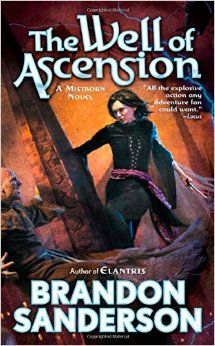
Review: The Well of Ascension by Brandon Sanderson (Mistborn Book 2)

Well of Ascension


Review: The Well of Ascension by Brandon Sanderson (Mistborn Book 2)

Short Review: A sequel that feels pedestrian and somewhat underwhelming until the reveal and twist ending.  An ending that saves the book.  A fascinating continuation and evolution of the characters from book one.


Actual Review:
Book 2 of Sanderson’s Mistborn series begins shortly after the end of book one.  The Lord Ruler is dead by Vin’s hand, Elend is now king of Luthadel but has set up a quasi-democratic council to rule with him, a new religion has sprung up that worships Kelsier ‘The Survivor’, and several armies are descending upon the capital in order to seize the fabled atium reserves of the Lord Ruler.  As one would expect when the despotic tyrant of an empire dies, there is chaos across the land as nobles vie for power and control.

The second book of a trilogy, as this initially was before the series began to build larger, can often be something of a problem child for authors, but Sanderson’s narrative moves the story along without any of the usual signs of trouble even if the pace and focus of the story are very different to The Final Empire.  Eschewing the great caper storyline of the first novel, Sanderson instead focuses more on the political turmoil created by the death of the Lord Ruler and the subsequent collapse of the empire he had ruled and controlled with ruthless efficiency.  So rather than producing more of the same, Sanderson gives the reader something that they didn’t know they wanted, a story about what happens after you kill the Dark Lord™.   And rather than ‘they all lived happily ever after’, things seem to go from bad to worse for our intrepid rebel alliance.

While still the central character, Vin is no longer the sole focus of the story and she now shares narrative space with Elend and the Terrisman Sazed, as well as my favourite, the kandra shapeshifter.  For some readers this shift into a split focus may rob them of some enjoyment, particularly if they had built up any great attachment to Vin.  But Vin’s journey in book one from street urchin to extremely powerful and competent mistborn didn’t have much further to go in that vein, so the change to focus more on her competence and character growth, rather than her abilities is a welcome development.  More so as she finally gets paired with a genuine challenge in the form of Zane, a fellow mistborn, who seems just as at ease with allomancy as she is, and is accompanied by the kandra, OreSure, who acts as both sidekick and foil to Vin.

This shift in focus leads to Vin developing as a character, rather than pushing the over-arching plot along, and as mentioned, may make her sections seem less essential than before, although no less action packed.  She gets embroiled in numerous scrapes and battles, and Sanderson doesn’t exactly shy away from using her as an action set piece.   In fact, in comparison to the first book, Vin’s body count in this seems a lot higher.  The trend being representative of the fact that she moves from young trainee and apprentice, to active agent, assassin, and bodyguard, in effect, growing up.  While there were sections of Final Empire devoted to the slightly tedious and repetitive ballroom scenes in which Vin dabbles in ham-fisted court intrigue and gossip, in this book she devotes her time to being mistborn and embracing her more destructive skill-set.  This change provides most of the much needed action and excitement in this novel, and with OreSure, much of the witty repartee.  So it isn’t really a bad thing at all.

One of the most surprising developments in this novel is how the character of Elend evolves.  While somewhat nondescript and wet in the first novel, and fairly unconvincing as a love interest for Vin, his character arc and development here is extremely welcome.  Rather than assume that he automatically grows into his leadership role as some destined hero, Sanderson brings in another Terris character, Tindwyl, who takes it upon herself to instruct Elend in the ways of kingship.  Her lessons with Elend and his slow growth into a strong king form a solid plot thread that ties the political arc of the power struggles in Luthadel together.  The amateurish, arm-chair revolutionary dilettante of book one is slowly replaced over the course of the novel by a leader, a king, a man of character.  This development of his character, punctuated by Tindwyl’s acerbic comments and with all Elend’s growing pains exposed, forms a fairly fascinating story as he painstakingly ‘fakes it until he makes it’ and becomes the leader Luthadel desperately needs.

The change in Vin’s storyline to a more action-oriented one, and the focus on the development of Elend as a leader make for some fairly engaging and interesting reading.  While very different to the caper-focus in the first novel, this is actually entertaining and fun.  They both grow into believable characters who demonstrate a growing depth and complexity that was somewhat missing from the first book in which their characters were predominantly defined by their function and role within the story.

But the book is not all good news.  A strange issue arises in the fabric of this story.  Elend’s plan for a democratic republic, or at the very least a democratic council of regents, falls flat.  A combination of self-interest, corruption, ignorance, and ambition leads the council to fail and Elend is voted out of office.  But rather than leave it there Sanderson has Vin step in and essentially place Elend on the throne as Emperor and Dictator through the use of magical and physical force.  In effect making Elend a tyrant emperor… like the one they spent all that time overthrowing in the previous book.  In his defence, Elend has only the best of intentions and is doing it for the good of the people and the country, and we can trust him because he is the good guy.  Uh huh.  Yeah.  Sure.

I think that this is one of my problems with this novel, the undercutting of each storyline in a way that negates its relevance.  If Sanderson’s characters had cause to question their becoming the very thing they rebelled against, instead of paying lip-service to the idea but dismissing it because they, the narrative, and the reader accept them as heroes, then this would be very clever.  But Sanderson just nods at this occasionally without ever actually engaging with it.  In fact, the narrative gose to show that they are right and justified in establishing a tyranny.

Sanderson goes to great pains to outline Elend’s benevolent desire to create a just and representative government and then, by the end of the novel, has him, supported by his powerful friends, overthrow it and seize power.  And we, as readers, are meant to agree with this.  So the novel reads as fairly anti-democracy as it will always be corrupted by cronyism, avarice, and ambition, and is actually pretty pro-tyranny.  Elend’s position as a tyrannical ruler promises to be efficient, direct, and because he is a good man, relatively fair, at least from the point of view of someone who agrees with his position, like Vin… the person who makes him Emperor.

In the first novel it is clear who the good and bad guys are, or at the very least, who the sides are and which side we are meant to root for.  Even if by the end things grow more complicated, the struggle is clearly delineated.  But in this novel, the bad guys are dispersed, threatening but not really evil or even that worrisome.  The stakes seem less high, less relevant, and less specific.  The main reason Elend opposes handing the city over to any of the lords leading the other armies is so that he can protect his new type of democratic government… that he himself then is part of overthrowing.  For their own good of course.  Elend wants to protect the freedom of the skaa and all the citizens from a tyrannical dictator who will simply take control and rule them… the way he does at the end.  The political storyline then completely disappears in the dying pages of the book to be replaced by the overarching mystical storyline that, until the end, has been fairly sketchy at best.  So it feels like the majority of the book was simply killing time for an all-important magical scene at the end, and therefore the ramifications of the politics are actually inconsequential, the characters actions are inconsequential, the majority of the developments and plot points are inconsequential.

Actually, the Koloss themselves, the mercenaries who make up one of the armies, also bothered me a little in this novel.  Newly introduced in this story they are presented as violent, savage, practically mindless, dumb brutes; they are monsters.  Sanderson then tries to make them more interesting and perhaps sympathetic by showing how they are being manipulated and used by one of the lords.  Ah ha, so this is going to be like the skaa storyline about freeing an oppressed people?  Nope.  Vin swoops in at the end and simply takes control of them, mind and body.  For their own good of course, and for the good of the people of Luthadel.  Never mind that this is a complete invasion and violation of their agency in a way you would think that the scrappy insurgents from book one would rally against.  The Koloss have even less power and freedom, and even fewer rights than the skaa, but they are a monstrous threat, so apparently it is fine that Vin uses them as living weapons and imposes her will on them.  So it is a good thing that Vin, just like Elend, is a good dictator.

Because of all this I am left wondering at what the moral centre of this story is meant to be.  The first book was a clear struggle for the freedom of the enslaved skaa by a ragtag group of rebels and rogues.  To depose a tyrannical ruler and encourage self-governance.  To remove the corrupt and decadent nobility who profited from the oppression of the people.   Yet each of these positions is essentially negated by the actions of Vin and Elend by the end of book two.  Elend, a noble, is now emperor with magical powers (something that has worked out so well in the past for Luthadel).  The skaa are indeed free in that they are no longer slaves, but have no say in how they are ruled, and have been pretty much left to fend for themselves with no money or means to actually find a place in society.  The nobility, while reduced in influence, still hold almost all the power, wealth, property in the land, and are the only ones who have had access to education meaning that they will continue to lord it over the rest of the populous.  So after overthrowing the Lord Ruler, Vin et al essentially set up almost entirely the same situation, but with less competence, experience, or effectiveness.  The major change simply being that they are now the elite power living off the people.  This is a fairly depressing outlook on life, ‘hello to the new boss, same as the old boss.’  While no doubt more ‘realistic’ than the heroes winning the day and succeeding, it goes against the narrative grain constructed by the narrative tone and perspective.

Then we come to the dénouement, the conclusion of this particular volume.  The enemy armies are threatening and meant to be impossible to beat, but rather than having a plan to defeat them that Elend, Vin et al will execute as a team and that has a slim chance of winning, once again it comes down to a magical save in the 11th hour.  So the whole point of having Elend set up a council, learn to be a great leader, and all the political posturing comes to naught and has almost zero impact on the actual story.  To have a deus ex machina end this book as well as the first one does not bode well for the series.  Especially as the idea of three hostile armies threatening each other and the city should have proved fertile ground for intricate political manoeuvring and Machiavellian intrigue.  What Sanderson leaves us with is closer to high school politics and ham-fisted, juvenile intrigue, rather than imperial statesmanship as each manoeuvre ultimately has almost no real bearing on the narrative.  That isn’t to say that the battles and fights aren’t fun to read, it is just that it seems to come down to Vin having super-special magical powers and just so happening to stumble across a magical secret in the nick of time… again.   So rather than the other characters actually being effective, there being real consequences to the heroes’ actions, and there being a discernible reason for the plot of three quarters of the novel, everything hinges on a surprise ending.

While much of this will no doubt be built upon in the third book, at the end of book two I wondered why I was meant to be supporting these characters at all.  Vin is a murderer and assassin, Elend has become a dictator, and the majority of the book has focused on a storyline that has almost zero relevance for the important reveal at the end.

But it is here that Sanderson saves the book.  The reveal.  The twist.  The all-important over-arching magical narrative.  Were it not for this I would have been extremely disappointed in the ending as it panned out.  While I might call shenanigans on the use of deus ex machina and immaculate timing yet again, it is nonetheless an intriguing end.  An ending that makes me want to read the third book immediately.  And isn’t that what a good story is meant to make you do?  Admittedly, although the fact that the book requires a twist ending that mostly comes out of nowhere to save it might seem a cheat, there are enough hints, references, and intimations dribbled through the book to make it seem a natural part of the world and overall story arc.  Even I will admit that I was hooked on finding out what was going to happen next.

But ultimately I thought that this was a fairly uneven book.  The early storylines that held my interest turned out to be fairly meaningless for this novel.  The hook and twist ending, while vital for the series as a whole, made the majority of the book’s action seem irrelevant filler, even if it did ensure that I immediately queued up the next instalment to read.


Review: The Shannara Chronicles (MTV, 2016)


the-shannara-chronicles-poster


Review:  The Shannara Chronicles (MTV, 2016)

[Mild spoilers for the first episode]


Short Review:

Aiming for the scale and beauty of Jackson’s Lord of the Rings filmic adaptations, MTV’s Shannara comes surprisingly close on a TV budget but still has a ways to go.  Youthful energy, modern dialogue and a fascinating world, Shannara is a colourful, epic, quest fantasy that will appeal to those tired with the unrelenting grimness of Game of Thrones but who are not completely familiar with the tropes of the genre.


Longer Review:

The first Shannara novel, The Sword of Shannara (1977), was much criticised for its similarity to Tolkien’s famous trilogy, but, just like Star Wars (1977), it captured public imagination by ‘borrowing’ liberally from its predecessors and repackaging the stories and characters into a palatable form for mass consumption.  But it was with the second novel, The Elfstones of Shannara (1982) that Brooks began to truly develop his own, unique, epic fantasy, and it is this novel that forms the basis of the television series, The Shannara Chronicles.

For those unfamiliar with the books, the series is set a couple of thousand years after an apocalyptic war wiped out most of humanity and led to humans evolving into divergent species or trolls, gnomes and dwarves.  Elves reappeared, magic returned, and the Pacific Northwest became the Four Lands; Northland for the Trolls, Westland for the Elves, Southland for the Humans, and Eastland for the Gnomes and Dwarves (who get a bit of a raw deal really).  Oh, and there are demons too.  A minor problem with the show is that the ‘world’ of the Four Lands, a least as it has been explored thus far, seems to be only a few miles wide as characters can easily travel by foot or horse from one part to the other in an extremely short time.  It becomes hard to sell ‘epic’ when you imagine the setting to be about the size of a large national park even when cinematic shots of sweeping vistas are dropped in.  It may very well be that the true size of the setting will be explored later on, but I got the distinct impression that everywhere was within a two day ride.  Either that or the characters happened to have amazing luck in finding each other over vast distances and possessed magically fast horses.   But these coincidences and meet cutes are so common to film and television that it can almost be forgiven.

The opening credits sequence is a wonderful blend of a James Bond opening sequence, potted-history of the fantasy-world, and blends stirring and disturbing in equal measure.  What is startling are the stark references to the apocalypse that led to the formation of the world of The Shannara Chronicles.  If you are unfamiliar with the setting then it can be a little strange.  It is both wonderful and jarring to see the post-apocalyptic world being referenced in a fairly well realised fantasy-scape.  Ruins of cars, helicopters, and oil-tankers lie strewn across evocative landscapes more commonly associated with Jackson’s panoramic shots in the Lord of the Rings films.  There is an odd cognitive dissonance created that both makes the world more immersive and unique, but also wrenches you out of the narrative as you wonder why some of the wrecks look only a few hundred years old at most.  In fact, another issue with the setting is that most things are too pretty.  Because of Game of Thrones we have grown used to worn, lived-in settings that have dirt, scratches, and faded livery.  Most of the sets in Shannara look a little too new, a mite too clean, and a fraction too fresh.  When this is combined with the occasional obvious CGI effect, the depth and authenticity of the world is called into doubt.  Given that belief in the world is key to belief in the story, this poses something of a problem for the series.  If you can’t take the world seriously, then you will find it that much harder to suspend your disbelief in regards to the story and the consequences.

[As a quick note, I have only seen the first two episodes, so this is a preliminary review, and the series may develop a bit differently over the coming weeks.]

The series opens with the introduction of the key characters, reveals the threat to the world, and, in short, sets up all the pieces to get the quest to save the world off to a rollicking start.  In keeping with the Elvish focus of this story, the majority of the cast are youthful and very pretty.  The two central heroes, Princess Amberle Elessedil and Wil Ohmsford, played by Poppy Drayton and Austin Butler respectively, are the young, naïve protagonists fated to save the world from the evil machinations of the demonic Dagda Mor (Jed Brophy).  They are guided by the stern Druid Allanon (Manu Bennett), who is the last of his kind and who adds some much needed gravitas and experience to the group.  They are also both hampered and aided by the rogue, Eretria (Ivana Baquero), a woman trying to escape the control of her family, a clan of Rovers (thieves).  There is also a parallel storyline, interwoven with the quest, concerning the intrigue in the Elvish Royal palace as they prepare for a war that only some believe is coming, and with the various princes vying for power, influence, and glory [presumably this becomes much more important in the later episodes that I have yet to see].

While on the subject of the cast, there is a bit of a problem with the lack of diversity, and I not talking about the abundance of actors whose surnames begin with ‘B’.  While the landscape of The Shannara Chronicles is rendered in a glorious spectrum of colour, the main cast is a bit on the pale side.  Given the source material I wouldn’t go so far as to accuse Shannara of white-washing, but I couldn’t help feeling that the series missed an opportunity to create a more ethnically diverse cast.  After all it is set in a far future version of Earth, so some of our diversity must have survived.  I may have missed some actors but as far as I could tell there were only about three or four actors of colour in the first two episodes.  This may not be a problem for some, but in this day and age, and in depicting a far future world, I had hoped to see something a little more representative.

[If I am mistaken then I whole-hearted apologise.  I have only had a chance to see the first two episodes once so can’t double check at the minute.]

On the upside, there are two female leads.  So there is that.  Speaking of which, Drayton’s Amberle is a conscientious, but slightly headstrong, princess who refuses to accept her place in Elven society.  Drayton looks the part of a beautiful Elvish princess, but despite initially being presented as more than capable of rescuing herself spends much of the two episodes finding herself in the role of target or victim.  Amberle [or Elvish Leia] ends up the sole survivor of a massacre and thus the world’s only hope to defeat the rising evil.  Drayton manages to convey the athletic aspects of Amberle’s character, her martial prowess and quickness, with grace and confidence, but seems less confident in the moments when emotion needs to be conveyed.  The aloof arrogance of the Elves as a character trait makes it hard to judge whether her stiffness is deliberate.  I am looking forward to seeing her settle into the role and develop the range that Amberle requires over the course of the story.

Butler’s Wil is a far more stereotypical fantasy hero, right down to the blonde hair, blue eyes, orphan status, mysterious lineage, magical heirloom, and childhood in a rural backwater.  Half-Elf Luke is informed by the mysterious druid Allanon [Fantasy Obi Wan] that he is the last of the Shannaras and has a legacy of magic to grow into and live up to.  Not only that, but that they have to go on a quest to rescue Elvish Leia and protect her from the Dagda Mor [Demon Vader].  The first thing that struck me about Butler was a strange resemblance to a young Brad Pitt.  He plays Wil with an endearing earnestness, and a touch of teenage smugness and disdain.  His disbelief concerning magic, his lineage, and the quest in front of him is a refreshing change from the accepting idiocy of many a fantasy hero who has graced our screens.  However, some might find the elf-ear jokes and innuendoes a little tiresome rather quickly.  Like Drayton, it may be that Butler simply needs a little more time to settle into the role to be able to demonstrate a more nuanced range than the first episodes gave him leave to do.

Of all the main characters I have to admit that I loved Manu Bennett’s Allanon.  His growly delivery and physical presence on the screen gives weight to the character, and he seems to be able to effortlessly convey an ancient fatigue, coupled with a sense of duty and irritable wisdom.  By far and away the most watchable of the cast and the one person who holds the story together and makes you want to believe in it.  This is aided by the make-up and costuming department.  The strange, ritualistic runic scars across his skin in addition to his scarred hand give a palpable sense of his complicated back-story, and the hint that it wasn’t pleasant to train as a druid.  In fact, Bennett really sells the weight and cost of working magic in this world that could so easily have become hand-wavy and silly.  No ‘expelliarmus’ or wimpy wand waving for him.  In one notable scene Bennett practically wrestles the magic to perform the effect that he desires, and the drained exhaustion he then exhibits ably answers why you don’t use magic to solve every little problem, like finding your keys.

Female Han Solo, or Eretria, doesn’t have that much to do in the first two episodes, but it should come as no surprise that Ivano Baquero is a joy to watch on screen.  She plays the rogue with such confidence and aplomb that it is hard to reconcile it with her role in Pan’s Labyrinth (2006).  She slips from effortlessly gulling one character with a seductive routine, to a scene in which she portrays an outward bravado while simultaneously projecting inner fear and doubt.  She also displays a seemingly natural chemistry with all of her co-stars and a confidence in her role and dialogue that some of the other actors appear to struggle a little with.  In fact, it is perhaps because of the strength of Bacquero’s performance that the other young actors seem a little out of their depth.

This brings us to the Darth Vader of the piece, the Dagda Mor.  With Shannara being filmed in New Zealand, and the story having more than a shade of Tolkien about it, it seems terribly unfortunate that the ‘look’ for the Dagda Mor is uncomfortably similar to an Orc from Jackson’s LotR trilogy.  They are eerily similar.  I say unfortunately because it appears that they stole one of the Orc costumes from Jackson’s prop department rather than create a truly unique look for their villain.  On the other hand, at least he doesn’t look like a Star Wars villain.  Despite this, Brophy conveys real menace and sinister malevolence in his scenes.  He drips a hateful evil without hamming it up, and, despite the fact that others might cry ‘stereotypical evil overlord’ it really is refreshing to see a truly evil, irredeemable villain on the screen, in opposition to the forces of good.  But he is a villain whose desire to destroy the world doesn’t seem contrived or random, he simply hates the lot of them.  Both Brophy and Bennett manage to make the ‘ancient magical’ language sound authentic, and they deliver their lines naturally lending a great deal of credibility to the enterprise.

Actually, many of the comparisons above are unfair.  It is just unfortunate that Shannara premièred so closely to the relaunched Star Wars: The Force Awakens (2015) and so it seems that the comparisons will be hard to ignore.  Given the age of the source material, its development in parallel with Lucas’ film series, and the overlapping influences on both sets of narratives, such similarities might well have been inevitable, but that doesn’t stop them being there, and it doesn’t really excuse the producers from their failure to disguise them.  However, fans went in their droves to see the new Star Wars despite its lack of originality, so perhaps this won’t be as major an issue for Shannara as it might have been.

For those that think that Shannara is cliché-ridden and stereotypical, you might want to consider how many of these clichés are in Star Wars: The Force Awakens, an ostensibly original story developed in the 21st century and whose fans have defended its lack of originality of many fronts.  At least Shannara comes from much older source material and is somewhat constrained in how much it can change and adapt to the modern audience.

So while many might complain that Shannara is a walking compilation of old-fashioned fantasy tropes, I doubt that the intended audiences will think so [see above note about The Force Awakens].   Let’s take the fans that grew up on Brooks’ series.  If they loved the books and still have a warm place in their heart for them then this is their chance to see the books on screen, to see the scenes from the pages of their childhoods enacted in gloriously live-action technicolour.  They want to feast their eyes on the landscape of their imaginations come to life.  Fans of the books are not likely to be disappointed in the area of ‘originality’ because they are already intimately familiar with the story, characters and series, so all those issues become irrelevant.  They won’t care a jot about the story and characters resembling other series, they will just want to see their Amberle and Wil rushing around to save the world.  They may have complaints about CGI effects, very modern sounding dialogue, and a slightly teen-focused vibe coming from the series, but not ‘originality’.

In terms of other audiences then, it seems that MTV is aiming this series squarely at the Harry Potter generation, those more familiar with the film versions of Eragon (2006) and Percy Jackson (2010) than printed classic fantasy like Tolkien’s Lord of the Rings (1954).  While many older fans might complain about the youthfulness of the actors, their general prettiness and lack of grit, and the fantasy clichés that pop up in an all too familiar story, younger fans may not be quite so well versed in the history of fantasy.  Given that previous attempts to bring fantasy to the small screen have included the campy Hercules: The Legendary Journeys (1995) and Xena: Warrior Princess (1995), the pretty dire and misogynist Legend of the Seeker (2008), and the über-dark Game of Thrones (2011), Shannara will come across as something slightly different.  A youth focused, fun, action-filled epic, but without the camp.  Good versus evil, but without rapey undertones.  Pretty people romping around a brightly lit fantasy world as opposed to the depressing grey landscape of Ireland in the rain.  Teen romance and love triangles.  It has more in common with shows like Supergirl (2015) and The Flash (2014) than it does Martin’s medieval-flavoured grimfest, and will find the audience that appreciates that.

This attempt to target a younger audience may explain why the characters use modern speech and idiom rather than the more formal or archaic faux-medievalist language we have come to expect from fantasy series and films.  Admittedly I am one of those people who prefers a slightly more formal level of diction from my fantasy characters, and therefore I found the use of modern vernacular more than a little off-putting.  But each to their own.

The Shannara Chronicles is not without its flaws.  Some of the CGI is a little unconvincing or poorly integrated, but it is working with a TV budget, not a billion dollar cinema budget.  Some of the acting and dialogue in the first two episodes fell a little flat, but it was just the first two episodes and even the best actors sometimes need a while to ‘get’ their role and character (have you ever seen Leonard Nimoy’s original portrayal of Spock in Star Trek? Check out ‘The Cage/The Menagerie’ and ‘Where No Man Has Gone Before’).  The story, characters, and ideas are not exactly screaming originality, but three-quarters of Hollywood cinema, and over half our TV shows aren’t exactly winning hands down on the originality front. Some aspects of the world and the costuming don’t entirely sell the concept of a future ‘real world’, but even big budget productions can make mistakes like this, and some of the wardrobe decisions are great.

So before you turn your nose up and sneer at this series, I would humbly suggest giving it a chance.  High magic, high drama, an honest to goodness story of heroes versus villains to lift us out of our depressing cynicism, a brilliantly rendered world, and a whole heap of adventurous fun. There is a lot to like here and a lot to build on, and very few shows hit it right out of the park on the first pitch.

To summarise then, on the downside it isn’t a new Game of Thrones.  On the upside, it isn’t a new Game of Thrones.  We have room on our screens for more than one fantasy show.  Let’s support this one, and the next, and the next.  Shannara might not be for everyone, but it has potential and can entertain if you let it, especially if you are part of the younger generation.

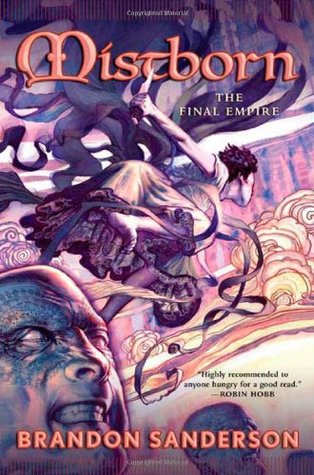
Review: Mistborn: The Final Empire by Brandon Sanderson

Mistborn Book 1


Review: Mistborn: The Final Empire by Brandon Sanderson

Mistborn: The Final Empire is book one of the Mistborn series, and part of Sanderson’s expanding, and increasingly intriguing, Cosmere universe.  It follows the adventures and coming-of-age narrative of young street urchin Vin, and her participation in a rebel plot to overthrow the ostensibly immortal god-emperor of the land, the Lord Ruler.

On the face of it Mistborn has all the markings of a walking fantasy cliché.

We have a young hero who it just turns out has incredibly and unbelievably rare super-special magical powers, and not only that, but has an uncanny affinity for them and learns how to use them absurdly quickly and to an extent that puts all others to shame.  Not to mention a secret bloodline that has ramifications for the upper echelons of society.

We have a scrappy group of super-talented rebels (or quest group for those that are familiar with RPGs) faced with an impossible task that you know that they are somehow going to pull off.  Sort of like a million-to-one shot that works nine times out of ten.  Luckily each member of the group has one specific talent that adds to the plan and pretty much defines them as a character.  For example, Breeze can soothe people’s emotions, Clubs can hide their allomantic activity, and Ham is incredibly strong.

We have the slightly sinister mentor, Kelsier, who, it turns out, has a few dark secrets in his past.  Thankfully he is lucky enough to take a chance on rescuing a young orphan girl, the super-special hero mentioned above, who becomes essential to his plan succeeding.

There is an immortal Dark Lord™ that has been ruthlessly subjugating the masses for a very long time, is obscenely powerful, and appears to be definitively evil for the sake of being evil (ruling with an iron fist, being mean to puppies, and guilty of living alone in a large, foreboding, yet tastefully ostentatious palace which possesses no chamber pots or bathrooms).

The society of the fantasy world has not really evolved or changed in hundreds of years with technology, fashion, literature, and science all remaining relatively static, and made up of two peoples; The Nobles, privileged, spoiled, and decadent, and the Skaa, oppressed slaves.

There is an evil corrupt government bureaucracy and evil military religion that maintain law and order in the land in cruel and vindictive ways.

And lo, there is also an ancient prophecy knocking around that must be fulfilled.

Now if there was an awkward and unnecessary romantic sub-plot and a dragon you would have a full house in fantasy cliché bingo… ok so there is an unnecessary romantic sub-plot but there isn’t a dragon.  Maybe even Sanderson thought that dragons at this point would have been overkill.

It is to Sanderson’s credit that he utilises these stereotypes knowingly, and provides enough subversion so that they don’t completely weigh down the narrative in ever increasingly obvious ways.  But in terms of story there is little here that will be of any surprise to a fantasy reader, until the end, but to give that away pretty much spoils the story.  In this case, the end, at least, partially justifies the means… so to speak.

Mistborn is set on the world Scadrial, a secondary world that is plagued by nigh continual volcanic ash falls, nightly planet-engulfing mists, and orbits a weak red sun.  Despite the seemingly alien nature of the planet and the occasional reminders about the ash and the mists, most of the book feels like it is set in a fairly standard and familiar pseudo-medieval fantasy world.  The strangeness of the landscape never quite leaves the page to enter the imagination, and there is a certain feudal European feel to the entire planet.  Given that worldbuilding is something so important to many modern fantasy narratives, and is also a frequent point praised in Sanderson’s work, perhaps a closer look at the world of Scadrial is necessary here.

The world essentially has two classes of people, the nobles and the Skaa.  The Skaa, although they physically resemble the nobles, so much so that they can be easily confused for them, are a slave race.  Sanderson didn’t use anything as clichéd as colour or some sort of physical characteristic to differentiate the two races, actually, he doesn’t really use anything to differentiate the two races apart from the name.  But choosing a slave race name based on a word for a type of Jamaican music is perhaps a little too on the nose for me.  Regardless, despite the fact that the narrative insists on, and then actually explains how, the two races are physically different, the narrative also depends on the fact that there is no real physical difference between them.  Yes, it is indeed that contradictory.

Oppressed and subservient to the nobles, the Skaa’s only hope lies in the Skaa rebellion.  For centuries a small pocket of rebels has tried to overthrow the Lord Ruler (Dark Lord™) without success.  That is, until, Kelsier, the survivor of the prison quarry, the Pits of Hathsin, returns to the capital, Luthadel, to organise an uprising.  He rounds up a crew of magically talented individuals, and in the process rescues the protagonist of the novel, Vin, from her time in an evil criminal gang, by recruiting her to his good criminal gang…

But luckily for the reader there is never any doubt about who to support as the Skaa are treated as slaves, apart from those Skaa who own their own independent businesses or are semi-successful merchants, but we never meet any of those apart from two of the main characters who are in Kelsier’s crew.   But the vast majority of Skaa are treated as slaves and are horribly abused by the evil nobles and therefore Kelsier and his crew are undoubtedly good freedom fighters, thieves, murderers and conmen.  Sanderson makes sure to show the Lord Ruler and his minions killing people in cold blood to prove a point and to cow the public, just like Kelsier does to the nobles.  Have I mentioned that there are some issues with the worldbuilding?

The world of Sadrial possesses two major forms of magic, the first, and the focus of the first novel, is allomancy, while the second, feruchemy is more important in the later books.   Allomancers, those gifted with this exceptionally rare ability, can ‘burn’ certain metals to create amazing effects.  Essentially they ingest small pellets of specific metals that create reservoirs of power that they can tap to create very specific effects, such as the ability to pull metal toward them, or push metal away from them.

Only the rarest of the rare Allomancers (alloy-mancer, like necromancer) can ‘burn’ more than one metal, and those few are called Mistborn, hence the title of the book.  As it turns out, almost the whole of Kelsier’s crew are Allomancers, it is what makes them so special and effective, and Kelsier himself is a Mistborn.  It just so happens that Vin, our hero, is also a Mistborn.  Given the tight focus of the novel on Vin’s adventures with Kelsier’s crew this gives the unfortunate appearance that almost every character has this exceptionally rare magical ability and therefore it is not rare at all in the novel.  But we are also led to believe that despite the fact that this is rare, there are enough noble allomancers that a strong enough trade in allomantic metals exists, and that Skaa workers are trusted enough to run these businesses* and there are enough allomancers that noble houses have entire houseguard squads made up of low level allomancers who wield no political power nor hold positions of authority within the houses.

(*While never explicitly stated that the metallurgists who provide the allomantic metals are Skaa no noble would risk buying their metals from another noble house that they may be at war with, and if Sanderson had each noble house produce their own allomantic metals then, no matter how logical this would be for the world, Kelsier and his crew would have difficulty in accessing the necessary supplies)

Sanderson is at pains to lay out and explore the strengths and weaknesses of this fairly original magic system, and if you enjoy reading about how different magic systems are used, then this will be a major strength of the novel for you.  A good third of the novel is focused on Vin slowly training, experimenting with, and growing to command her powers.  To give Sanderson his due, these sections are much more entertaining and engaging than comparable training sessions found in a multitude of other fantasy works.  Indeed the action sequences detailing the use of allomancy, both the aspects of training and later in combat, are extremely well executed with cinematic flair.

So as long as you don’t think too hard about the actual ramifications of the rules of the world, the physical descriptions of the people and the landscape, and the fact that the rules of the magic system become flexible according to necessity, and just go along with the flow, the worldbuilding in this novel is great.

But… and this is an important but…

But while much of what I have said thus far has been a little damning, Sanderson does weave a fairly compelling tale.  His prose trips along in an amiable fashion.  The character of Vin is engaging and interesting, and it is genuinely nice to have a central female hero who exhibits depth and backstory, and also isn’t raped.  Kelsier possesses some elements of moral and character complexity that become more apparent as the plot trundles on.  The crew is made up of colourful characters that round out the story and give it some interest as their sense of camaraderie is explored and they grumble and gripe at one another.

More importantly, it is the events and the central mystery of who the Lord Ruler is and why the world seems so strange and yet incomplete, that provide the much needed intrigue and interest.  The reveal and twists at the end of the novel are enough, even after all that I have said, to make me like the novel and read more of the series, as it turns out that so many of the clichés, the tropes, the ‘mistakes’ and weaknesses of the worldbuilding are very deliberately constructed on Sanderson’s part.  So much of what seems contrived and artificial actually plays a part in the broader context that the novel reveals in its last few chapters.

Granted, I will never rate this as among the best fantasy novels I have ever read, but Sanderson weaves a compelling story by acknowledging and engaging with the flawed nature of his world building, even if some flaws are perhaps unintentional, and focusing the story on explaining how this came to be.  And it is this surprising plot thread that convinces you to keep reading.  So rather than being an epic quest or a standard story about overthrowing a Dark Lord™, this is actually a mystery, and if you aren’t careful some of the cleverer aspects of the world will sneak by you.